
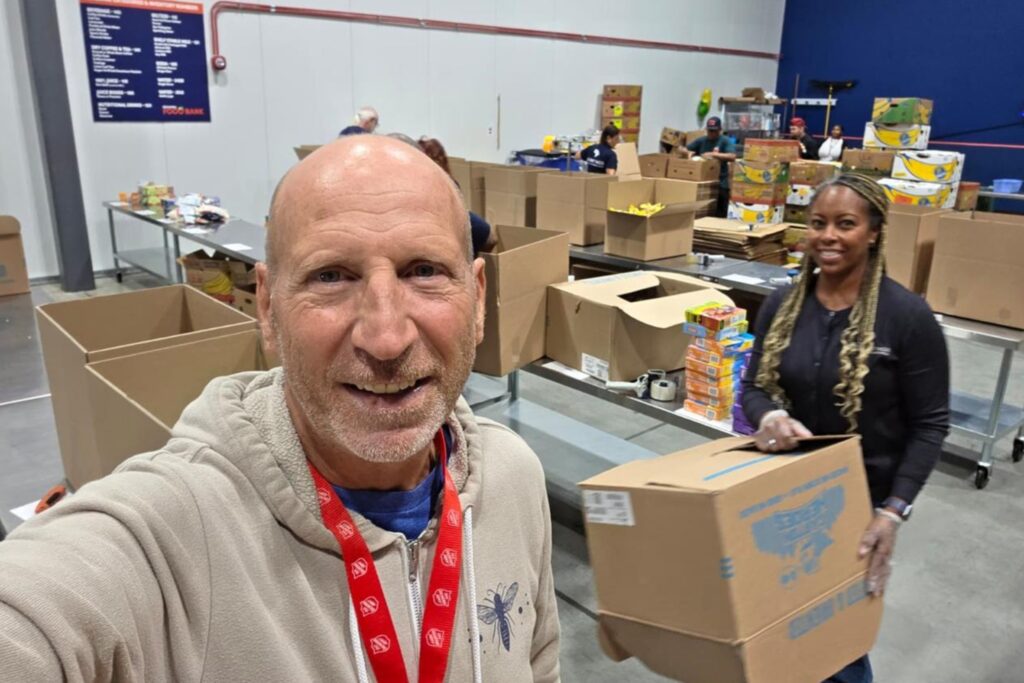
You have seen the video. A content creator pulls up in a car, steps out with a camera crew or a selfie stick, approaches a homeless person or a struggling family, and proceeds to give them food, money, clothes, or an elaborate surprise gift — all while the camera is rolling, capturing every emotional reaction, every grateful tear, and every moment of the recipient’s vulnerability in full, shareable resolution. The comment section is predictably split. Half the viewers are moved, thanking the creator for raising awareness and using their platform for good. The other half are furious — accusing the creator of exploiting the poor for views, of performing compassion rather than feeling it, and of turning someone else’s suffering into content whose real purpose is the algorithm rather than the altruism. The interesting question is not which half is right. The interesting question is why the same act of giving — the same food handed to the same hungry person — produces such dramatically opposite emotional responses in different viewers, and what those responses reveal about the specific psychological architecture of human moral judgment, the specific social norms around giving and dignity, and the genuinely complex ethics of charity that is simultaneously real and filmed. This article explores the psychology behind viewer irritation at charity vlogging — the specific cognitive and emotional mechanisms that make the filmed good deed feel wrong to so many people even when the deed itself is undeniably good — without dismissing the value of public giving or the genuine complexity of a phenomenon that sits at the intersection of psychology, ethics, social media culture, and the human desire to be seen doing something meaningful.
The Psychology of Moral Purity and Performative Giving
The irritation that many viewers feel when watching a charity vlogger film their acts of giving is rooted in one of the most deeply embedded moral intuitions available in human psychology — the specific sense that genuine virtue should be its own reward, that the person who helps others while seeking recognition for doing so has compromised the moral purity of the act in a way that the person who helps without seeking recognition has not. This intuition is ancient, cross-cultural, and remarkably consistent across different religious and philosophical traditions — the Matthew 6:3 instruction to let the left hand not know what the right hand is doing, the Buddhist emphasis on generosity without attachment to the result, and the Kantian moral philosophy whose dismissal of the act whose motivation is the social reward rather than the pure moral duty all reflect the same fundamental human sense that the act of giving is contaminated by the desire for the audience who witnesses it.
The psychological mechanism underlying this response is what researchers call moral licensing theory combined with the specific social detection system that human beings have evolved for identifying the exploiter and the free rider in social groups. The brain that evaluates the charity vlogger’s filmed giving is not simply assessing whether the giving happened — it is assessing the motivation behind it, and the presence of the camera, the edited thumbnail, and the monetized YouTube channel is the specific evidence set that the brain’s motivation detection system uses to construct its assessment. The conclusion that many viewers reach — that the camera presence indicates the recognition motive that contaminates the purity of the giving act — is not irrational, even if it is not necessarily accurate in every case. It reflects the specific evolutionary logic of the social animal whose survival in cooperative groups depended on the ability to distinguish the genuine altruist from the person who performed altruism for social status while not contributing the genuine cooperative spirit that the group’s cohesion most specifically required.
The concept of virtuous self-presentation — the specific social behavior of displaying one’s moral qualities for the positive impression it creates in observers — is one of the most thoroughly documented phenomena in social psychology, and its specific expression in the charity vlogging format creates the particular viewer response that the audience recognizes as the performance even when they cannot articulate exactly why the filmed giving feels different from the private giving whose absence of the camera most specifically distinguishes it. The research of psychologists including Benoit Monin and Dale Miller on moral self-licensing demonstrates that people who have established their moral credentials through a virtuous act subsequently feel more entitled to behave self-interestedly — a finding whose implication for the charity vlogger’s overall moral calculation raises specific questions that the viewer’s instinctive irritation is in some ways very precisely tracking even when the conscious articulation of the concern is less precise than the instinctive response whose accuracy may exceed the reasoning that attempts to explain it.
Dignity, Consent, and the Ethics of Filming Vulnerability
Beyond the motivation question — beyond the genuinely complex issue of whether the filmed giving is pure giving contaminated by the recognition motive or impure giving dressed up as charity — lies the specific ethical concern that many psychologists and ethicists identify as the most legitimate and the most specifically grounded of all the criticisms of charity vlogging: the specific impact of the filming on the dignity of the person being helped. The person who receives the charity in the filmed encounter is not merely the recipient of the material gift — they are simultaneously the subject of the content, the provider of the emotional reaction whose capture is the video’s specific commercial asset, and the unwilling or inadequately consenting participant in a public performance of their own need whose visibility in front of hundreds of thousands or millions of viewers most specifically and most lastingly exceeds whatever short-term benefit the material gift provides.
The consent issue in charity vlogging is the specific ethical dimension whose inadequate treatment by many content creators is the most legitimate source of the viewer irritation that the content generates — not the philosophical question of whether the motivation is pure, which is ultimately unknowable, but the specific practical question of whether the person whose vulnerability is being filmed has genuinely and fully consented to their image, their emotional state, and their circumstances being shared with the creator’s full audience. The specific consent conditions that most clearly distinguish the ethical from the exploitative charity vlogging include the time given for genuine rather than pressured decision-making, the clear explanation of the video’s reach and the specific audience size whose awareness the person being filmed most specifically deserves to have before agreeing to participate, the specific right to withdraw consent after filming, and the genuine option to receive the help without the filming whose availability as a real choice rather than a socially pressured formality most specifically determines whether the consent is meaningful or merely performed alongside the giving that the camera most directly captures.
The psychological concept of objectification — the specific cognitive process of treating another person as an instrument for one’s own purposes rather than as an autonomous subject whose own experience, preferences, and dignity are the primary consideration — is the lens through which many viewers process the discomfort of the charity vlogging encounter without having the specific vocabulary to name it. The person being filmed is experienced as the prop in the creator’s narrative of their own generosity rather than as the full human being whose specific experience of being filmed in their moment of greatest vulnerability, whose awareness of being a performance for an audience of strangers, and whose specific relationship to the gift that came with the camera is the most morally important consideration available in the encounter. The gifts and care that the charity vlogger is providing are real — but the specific way that the filming transforms the recipient from the subject of the giving into the object of the content is the transformation that the most emotionally intelligent viewers are detecting and responding to with the irritation whose specific source is the dignity concern rather than the giving’s material reality.
The Algorithm’s Role: When Incentives Corrupt the Intention
The specific structure of the social media monetization ecosystem creates the particular incentive alignment problem that makes the charity vlogging format’s genuine motivation so difficult to assess from the outside and whose existence is the specific structural reason that the viewer’s suspicion about the motivation is not merely the cynical misreading of the genuinely altruistic creator but the rational response to a genuine incentive structure whose commercial rewards for the filmed giving most specifically and most powerfully create the conditions for the motivation contamination that the viewer’s instinctive response is attempting to detect. The YouTube algorithm’s specific reward structure for the high emotional engagement content whose watch time, whose comment rate, and whose share rate is highest for the content that produces the strongest emotional response in the viewer creates the specific financial incentive for the emotional content that the suffering and the rescue narrative of the charity vlog most powerfully and most reliably delivers.
The specific monetization of the charity vlog — the pre-roll advertisement whose revenue increases with the view count that the emotional content drives, the brand sponsorship whose attachment to the charity creator’s positive public image creates the commercial relationship whose value most directly depends on the continued production of the emotional charity content, and the merchandise and Patreon whose fan community is most directly built and most continuously motivated by the specific emotional investment in the creator’s persona as the generous, caring person whose identity the charity content most specifically and most continuously constructs — creates the specific commercial ecosystem in which the boundary between the genuine altruist who happens to film their giving and the content creator whose giving is primarily the raw material for the commercial content is genuinely blurry in ways whose navigation requires a level of transparent honesty about the financial relationship between the giving and the content that most charity vloggers most consistently and most commercially inconveniently fail to provide. The viewer whose irritation at the charity vlog is the specific response to this specific structural concern is not being cynical — they are being structurally intelligent in ways whose specific accuracy about the incentive problem most specifically justifies the skepticism whose expression in the comment section most consistently and most predictably produces the very conflict that the creator’s defenders most consistently and most incorrectly characterize as the problem of the ungrateful, cynical internet rather than the legitimate response to the genuine ethical complexity of the charitable gift whose filming most specifically and most structurally complicates the motivation whose purity the viewer is most instinctively and most reasonably questioning.
When Filmed Giving Is Genuinely Valuable: The Other Side
The psychological complexity of the viewer irritation at charity vlogging does not resolve into the simple conclusion that all filmed giving is wrong, exploitative, or ethically compromised — a conclusion that would be both intellectually dishonest and practically counterproductive given the specific genuine goods that the public charitable act most consistently and most measurably produces in the social ecosystem that would not occur without the public visibility that the filming most directly enables. The specific argument for the genuine value of the publicly filmed giving is not the defensive rationalization of the creator whose primary motivation is the content — it is the honest acknowledgment of the specific social mechanisms through which the visible generosity creates the specific prosocial behaviors, the specific awareness, and the specific community formation that the private giving most specifically and most completely cannot produce with equivalent scale or equivalent cultural impact.
The social proof mechanism — the specific psychological phenomenon through which the visible behavior of others most directly influences the behavior of the observer whose adoption of the demonstrated behavior reflects the fundamental social learning process whose operation is as basic to human behavioral development as any learning mechanism available — creates the specific pathway through which the filmed giving generates the giving in the viewers whose observation of the charitable act most specifically motivates their own charitable behavior in ways whose cumulative social impact most directly and most measurably exceeds what would occur if the original giving had happened privately without the specific modeling effect whose transmission through the video’s distribution creates. The research on charitable giving contagion — the specific documented phenomenon through which the public visibility of giving increases the giving behavior of the observers — is the empirical foundation for the genuine prosocial value of the public charitable act whose filmed distribution amplifies the contagion effect most powerfully and most broadly in the social media environment whose reach most completely exceeds what any local community’s direct observation of the giving could most specifically achieve.
The awareness function of the charity vlog — the specific education of the viewer about the existence and the scale of the need that the video’s specific subject represents, whose absence of the video would leave the majority of the middle-class audience in the specific ignorance about the conditions of poverty, homelessness, and food insecurity that the geographic and social segregation of contemporary American life most consistently and most effectively produces — is the genuine public service whose provision through the emotional narrative of the charity vlog creates the specific awareness shift that the statistics-based charitable appeal most consistently fails to produce with equivalent emotional force or equivalent motivational impact. The viewer who learns through the charity vlog that the homeless encampment exists three miles from their home, that the food insecurity affects the family whose circumstances the video most specifically humanizes, and that the giving is both needed and impactful is the viewer whose subsequent charitable giving, whose political engagement with the issue, and whose specific community action is the specific good that the public visibility of the charitable act most directly and most measurably produces.
Finding the Balance: What Ethical Filmed Giving Actually Looks Like
The psychological insight that the viewer irritation at charity vlogging most specifically reveals is not that filmed giving is always wrong but that the specific conditions under which it is filmed most directly determine whether the act honors or exploits the recipient’s dignity, whether the motivation serves the recipient or the content creator’s platform, and whether the overall impact on the viewer creates the specific prosocial response of the motivated giving or the specific cynical response of the audience that feels manipulated by the emotional content whose commercial function is more apparent than the genuine charitable motivation whose presence would most specifically and most convincingly distinguish the ethical from the exploitative. The practical distinction between the charity vlogging that most viewers respond to with genuine appreciation and the charity vlogging that most viewers respond to with the specific irritation that this article has been exploring is the distinction between the content whose design centers the recipient’s dignity and the content whose design centers the creator’s image — a distinction whose specific operational expression in the filming, the editing, and the presentation most directly determines the viewer response whose accuracy in detecting the specific ethical quality of the content is considerably more reliable than the simplistic attribution of all viewer irritation to the cynicism of the ungrateful internet.
The specific practices that most consistently distinguish the ethical from the exploitative charity vlogging include the genuine, informed, and unhurried consent process whose documentation in the video itself communicates the specific respect for the recipient’s agency that the ethical creator’s approach most specifically requires, the centering of the recipient’s own story and perspective in the narrative whose construction gives the subject the specific authorship over their own representation that the exploitative format most consistently withholds, the transparency about the financial relationship between the content and the commercial incentives whose honest disclosure creates the specific trust that the undisclosed commercial motivation most directly and most lastingly destroys in the viewer whose detection of the hidden incentive produces the specific betrayal response that the transparency most completely and most preventively addresses. The creator who gives without the camera when the recipient prefers it, who uses the platform to address the structural causes of the need rather than merely the individual expressions of it, and who treats the recipient as the collaborator in the content rather than the subject of it is the creator whose specific approach most completely honors both the giving and the dignity that the best version of the gifts and care that public charitable giving can provide most genuinely and most memorably expresses.
Conclusion
The viewer irritation at charity vlogging is not the simple cynicism of the ungrateful internet — it is the specific, psychologically complex, morally nuanced response of the human moral detection system whose evolution for identifying the genuine altruist from the social performer is detecting something real and specific about the incentive structure, the consent conditions, and the dignity implications of the filmed giving format whose intersection with the commercial social media ecosystem creates the specific ethical ambiguities that the viewer’s instinctive response is most accurately and most usefully tracking. The psychology of the filmed charitable act is ultimately the psychology of the human desire to both give and to be seen giving, whose tension between the pure altruism and the social recognition motive is as old as generosity itself and whose specific contemporary expression in the charity vlogging format is a new version of an ancient human question about the relationship between the deed and the audience, the gift and the performance, the genuine care and the constructed image. The answer to the question of when the filmed giving serves the recipient and when it serves the creator is not a categorical one — it is the specific, contextual, relationship-dependent answer whose honest pursuit by the content creator whose motivation includes both elements simultaneously is the most ethical and the most humanly authentic approach available to the genuinely complex intersection of the gifts and care that real generosity most specifically requires and the public visibility that the social media platform most powerfully enables.